
Power & Mounting
Learn the power requirements and mounting options for the ALPON X5 AI edge computer. Prepare your device for reliable industrial deployment.
ALPON X5 AI power & mounting
Power input specifications, consumption profiles, Restricted Mode behavior, and approved mounting hardware for the ALPON X5 AI edge AI computer. Covers USB Type-C PD, the 12–24 V DC screw terminal, optional PoE+ on PoE-variant SKUs, and wall, DIN rail, and combined installation paths.
The ALPON X5 AI accepts power from three independent
inputs: USB Type-C PD (12 V or 15 V, 27 W minimum),
a 3-pin screw terminal (12 V–24 V DC,
27 W minimum) with reverse-polarity protection, and optional
PoE+ (IEEE 802.3at, up to 25 W) on ETHERNET 0.
All three sources share a common rail through hardware ideal diodes;
the device draws from the source with the highest voltage. Typical
consumption is ~8 W idle, up to
~45.5 W under full AI load. The fanless aluminum
enclosure mounts on a desk, wall, or 35 mm DIN rail via
2× M4 holes on the base.
Power inputs
The ALPON X5 AI ships with two standard power interfaces (USB Type-C PD and the 3-pin screw terminal) plus an optional PoE+ input available only on PoE-variant SKUs. Every input passes through hardware ideal diodes before joining a common system rail, so simultaneous connections are tolerated and the device always draws from the source with the highest voltage. For production deployments, use a single input at a time to simplify ground paths and failure analysis.
USB-C PD
12 V or 15 V · 27 W
PD profiles · 45 W recommended
Sink-only USB-PD port. Use the bundled 27 W adapter; a 45 W unit suits sustained AI workloads.
Screw terminal
12–24 V DC
Wide range · 27 W minimum
Hardware reverse-polarity protected with a dedicated chassis ground pin. The recommended input for industrial deployments.
PoE+
37–57 V · 25 W
802.3at · ETHERNET 0 only
Single-cable install on PoE-variant SKUs. Active on ETHERNET 0 only; not retrofittable.
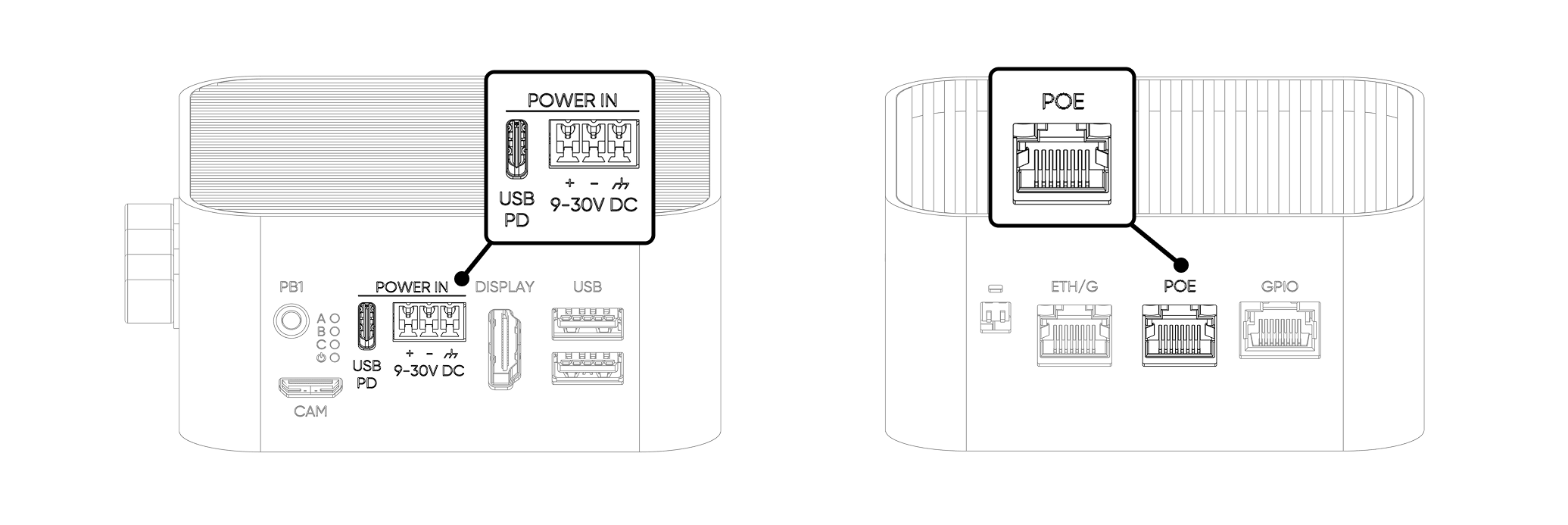
Hardware tolerates simultaneous connection across USB-C, the screw terminal, and PoE+, but we do not recommend using multiple sources at once in production. Simultaneous connection complicates ground paths and failure analysis.
USB Type-C PD input
The USB-C port is a sink-only USB-PD interface. It accepts power from a PD-capable adapter but does not provide USB data or power output during normal operation. The bundled adapter is 15 V / 1.8 A (27 W) and is sufficient for typical workloads; a 45 W adapter is recommended for sustained full-load inference on the DEEPX DX-M1.
CYPD3177-24LQXQ
Powering the device between 5 V and 12 V via USB-C forces the system into Restricted Mode. High-draw subsystems (USB, NVMe SSD, DEEPX DX-M1, camera, ADDON GPIO) are disabled to prevent brownout.
Screw terminal block (12–24 V DC)
The 3-pin screw terminal is the recommended input for industrial deployments. It accepts a wide 12–24 V DC range, includes hardware reverse-polarity protection, and provides a dedicated chassis ground pin for EMC-sensitive installations. Incorrectly wired +/− polarity will not damage the device, but the unit will not power on until corrected.
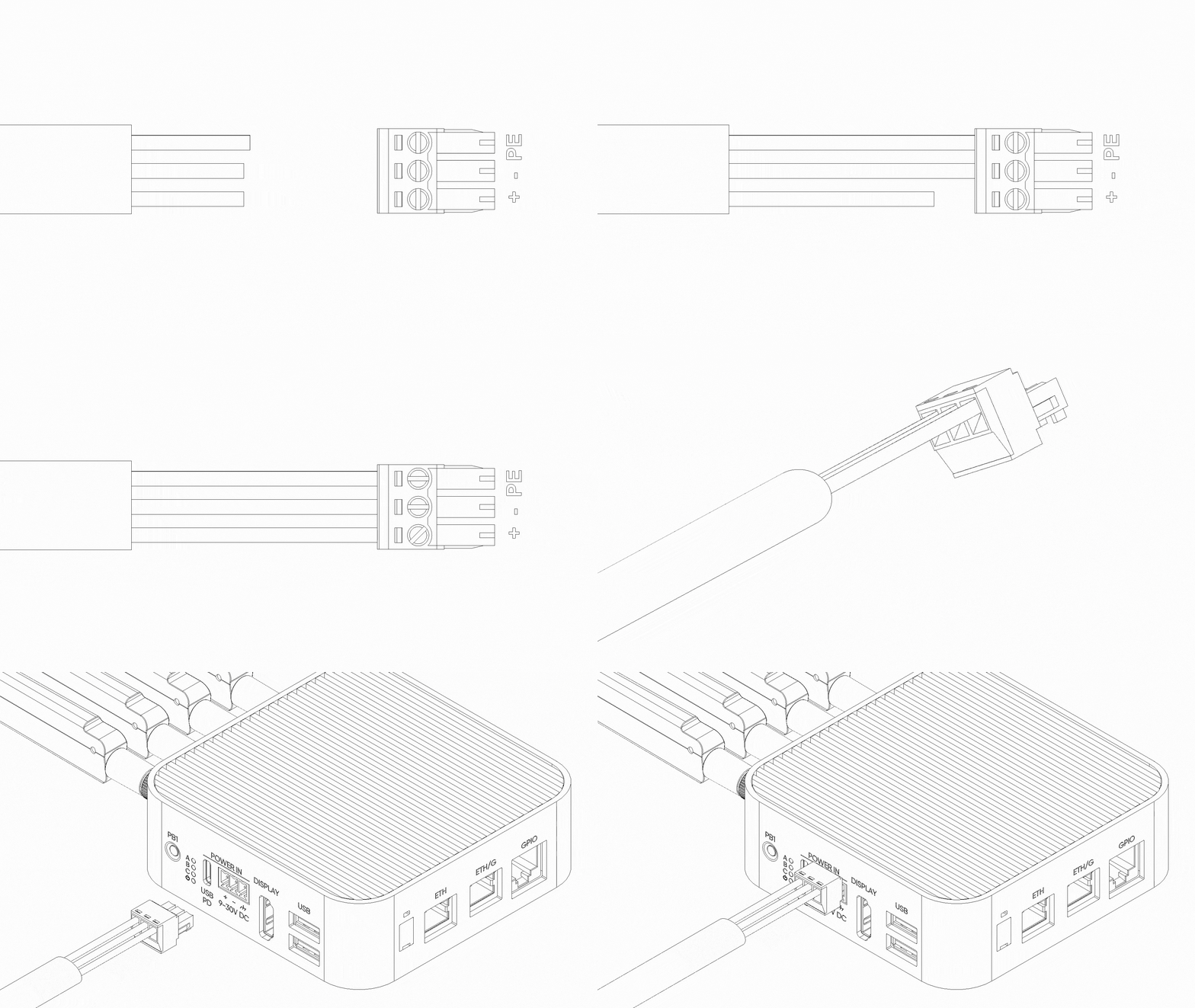
If the terminal block is powered below 12 V, the system enters Restricted Mode. Use a 12 V or 24 V industrial supply for full functionality. For long DC cable runs, prefer a 24 V source to compensate for line drop.
Power over Ethernet (PoE+)(Optional)
By default, the ALPON X5 AI ships with two standard Ethernet ports (ETHERNET 0 and ETHERNET 1) and no PoE input. On a standard unit there is no PoE port at all. PoE+ is an optional, factory-fitted build option available only on PoE-variant SKUs; it cannot be added after purchase, as the PoE module is installed at manufacture.
On a PoE-variant unit, the PoE module repurposes one of the two Ethernet ports, ETHERNET 0, so that a single Cat5e/Cat6 cable carries both network data and power. ETHERNET 1 is a USB-bridged interface and never delivers power to the system.
If you need single-cable power, order the PoE-variant SKU at time of purchase. A standard ALPON X5 AI has two plain Ethernet ports and must be powered over USB-C PD or the screw terminal. PoE cannot be retrofitted in the field.
ETHERNET 0 only
PoE+ is a convenient input for ceiling-mounted or field-deployed installations where one Cat5e/Cat6 cable carries both connectivity and power. Budget for 25 W at the PSE, accounting for cable losses on runs approaching 100 m.
PoE+ delivers up to 25 W at the device. Full load of all subsystems is ≈45 W, so PoE+ alone cannot sustain full load: on PoE, keep peripheral load (USB devices, camera, GPIO add-on 5 V rail) low enough that total draw stays under 25 W, or use the DC terminal / USB-C PD input for sustained AI workloads.
Restricted Mode
Restricted Mode is a protective state the ALPON X5 AI enters automatically when any input drops below 12 V. It keeps the base compute and networking blocks alive on a marginal supply (down to 5 V on USB-C) while disabling the PCIe bus and high-current peripheral rails. The device remains reachable for remote diagnostics, but it is not a valid operating state for AI workloads: the DEEPX DX-M1 is offline.
- CM5 compute module
- LTE Cat 4 modem
ETHERNET 0ETHERNET 1
- USB 3.0 ports
- PCIe bus (NVMe SSD & DEEPX DX-M1)
- ADDON GPIO port
- Camera port (MIPI CSI-2)
Restricted Mode prevents brownouts by routing power only to the core compute and networking blocks at low input voltage. Restore 15 V USB-C PD or a 12–24 V DC supply on the terminal block, then reboot so the PCIe bus re-enumerates.
Power consumption
Subsystem power at idle, 50% load, and full load. A dash (–) indicates the subsystem draws negligible standalone power at that level. For the CM5 Compute Module, LTE modem, voltage regulators, DEEPX AI accelerator, and NVMe SSD, the figures are measured draw. For the GPIO add-on port, USB 3.0 ports, and camera port, the Full Load figures are the rail capacity each port can supply to connected devices, not measured consumption. Values are approximate and depend on workload, connected peripherals, and ambient temperature.
| Subsystem | Idle (W) | 50% Load (W) | Full Load (W) |
|---|---|---|---|
| CM5 Compute Module | 4 | 7 | 10 |
| LTE Modem | 1 | 3 | 5 |
| Voltage Regulators | 1 | 2 | 3 |
| GPIO Add-on Port | – | – | 5 |
| USB 3.0 Ports | – | – | 9 |
| Camera Port | – | 1.4 | 2.5 |
| DEEPX AI Accelerator | 1 | 3 | 5 |
| NVMe SSD | 1 | 3 | 6 |
| Total | 8 | 19.4 | 45.5 |
For workloads that sustain the DEEPX DX-M1 at full utilization while powering USB peripherals and a MIPI CSI-2 camera, budget a 45 W supply. A 27 W source covers idle and moderate loads, but peripheral rails throttle under peak draw.
Mounting
The ALPON X5 AI enclosure includes 2× M4 mounting holes on its base for direct attachment to walls, panels, or DIN rail adapters. The fanless aluminum case doubles as a passive heatsink, so mounting orientation should preserve airflow across the top finned surface. Three optional mount kits are supported: wall, DIN rail, and a combined adapter.
The wall mount bracket, DIN rail adapter, and combined kit are optional accessories, not included with the ALPON X5 AI. Order the kit you need separately from Sixfab.
Wall mount
Steel L-bracket fastened to the device with 2× M4 screws. Suits drywall, plywood, and sheet-metal surfaces.
DIN rail
Clip-on adapter for any 35 mm top-hat rail (EN 60715). Mounts the device into standard industrial racks.
Combined
Wall bracket layered with the DIN rail adapter. Switch between surface and rail mounting without re-fastening.
Wall mount installation
The wall mount kit ships with all fasteners required for drywall, plywood, or metal panel surfaces. Use the supplied wall plugs for masonry and the lock nuts for panel through-mounting.
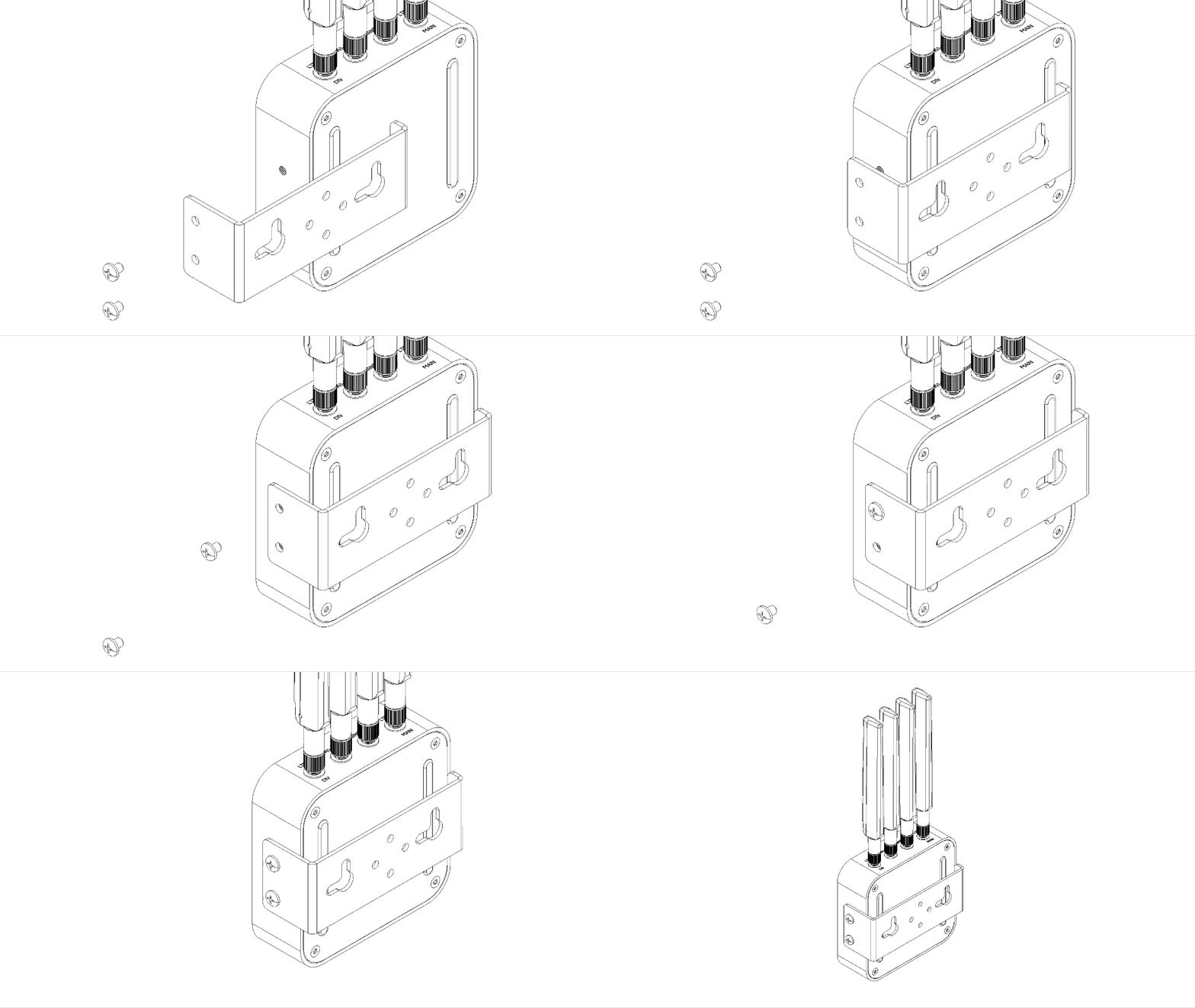
Mark the wall
Position the bracket on the wall, mark the two screw hole locations with a pencil, and confirm the bracket is level.
Drill pilot holes
Drill the marked holes to match the supplied 8 mm wall plugs. For metal panels, drill to the screw diameter and omit plugs.
Insert the wall plugs
Press the plugs flush with the wall surface before driving screws.
Attach the bracket to the device
Align the bracket with the 2× M4 mounting holes on the base of the ALPON X5 AI. Secure using the M4×6 mm Phillips pan-head screws.
Mount the assembly to the wall
Position the bracket over the wall plugs and drive the M5.5×45 mm sheet-metal screws until the assembly is flush and stable.
DIN rail installation
The DIN rail adapter attaches directly to the base of the ALPON X5 AI and snaps onto any standard 35 mm top-hat DIN rail (EN 60715). Use this method for control cabinets, industrial panels, or any rack where multiple ALPON X5 AI units need uniform spacing.
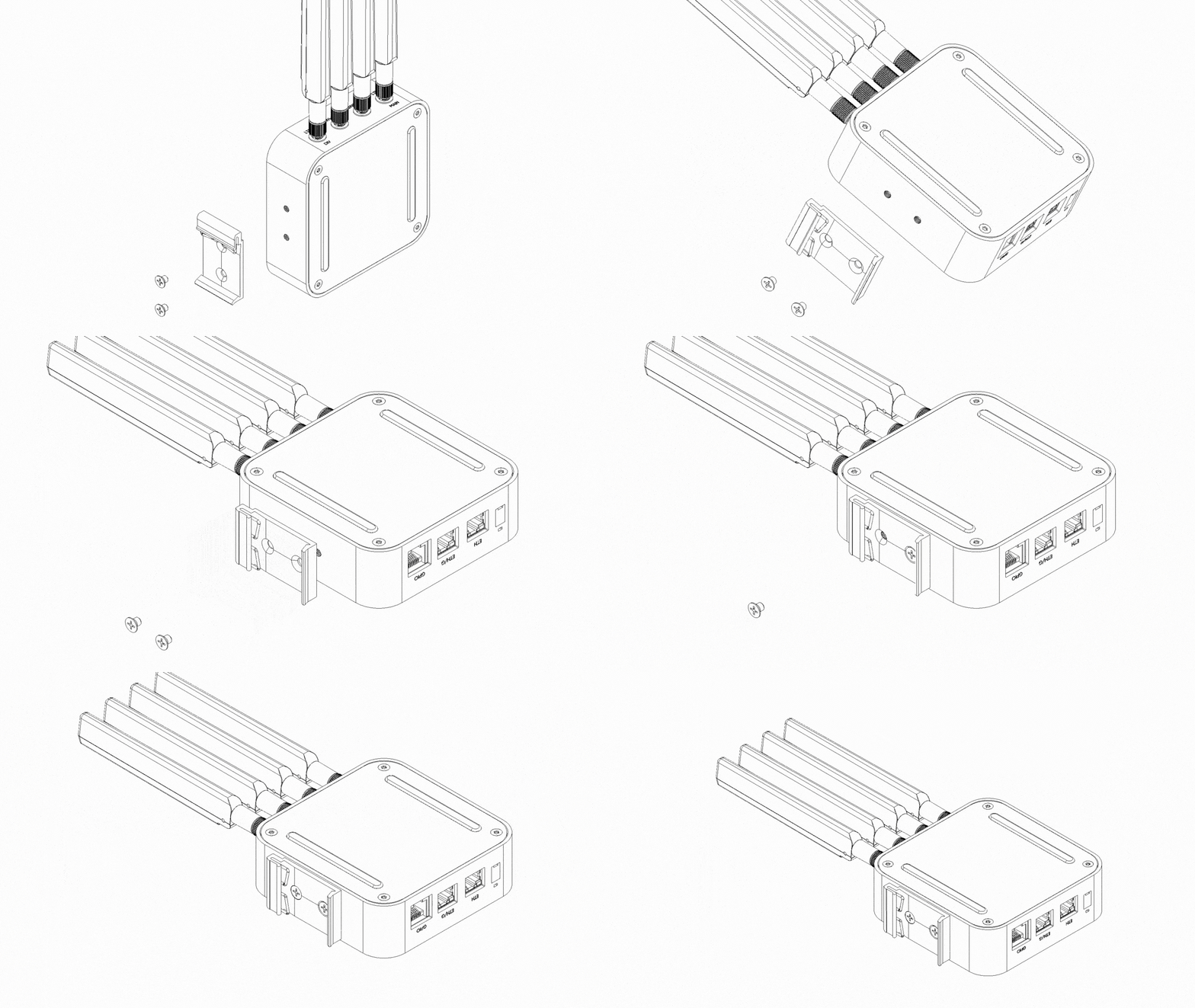
Align the adapter
Place the DIN rail adapter against the base of the ALPON X5 AI so its screw holes line up with the device's 2× M4 mounting holes.
Fasten the adapter
Drive the two M4×6 mm Phillips pan-head screws to secure the adapter to the enclosure.
Snap onto the rail
Hook the upper clip of the adapter over the top edge of the DIN rail, then press the lower section until it clicks into place.
Combined wall + DIN rail mount
The combined option layers the DIN rail adapter on top of the wall mount bracket. Useful when a deployment may migrate between surface-mounted and panel-mounted installations without replacing fasteners.
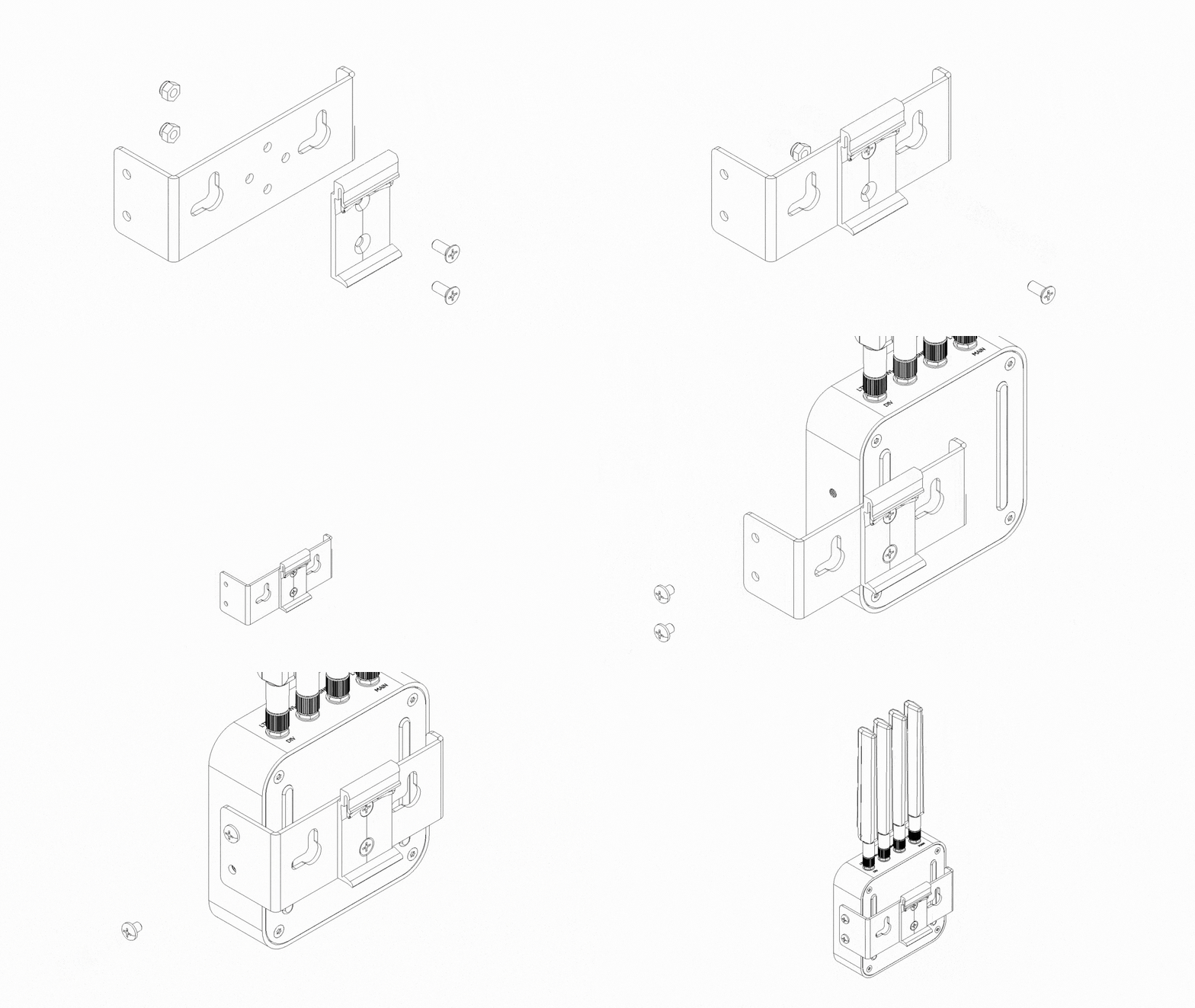
Install the wall mount first
Follow the wall mount steps above to attach the bracket to the device.
Layer the DIN rail adapter
Position the DIN rail adapter over the wall bracket and align its mounting holes.
Secure the assembly
Fasten the adapter to the wall bracket using the supplied screws.
Deploy on rail or wall
Slide the complete assembly onto a DIN rail, or fix the wall bracket backplate directly to a flat surface.
Mechanical envelope
Dimensions, weight, enclosure material, ingress protection, and environmental limits are listed in the Specifications page — Mechanical. The mount-specific parameter is repeated here:
Power troubleshooting
Common power-related issues and resolution steps. If symptoms persist after these checks, contact Sixfab support with the cable type, supply voltage, and observed LED state.
The device does not power on
- Confirm the supply voltage matches the input you are using: a PD profile of 12 V or 15 V for USB-C, 12 V–24 V DC for the terminal block, or a compliant 802.3at PSE for PoE+.
- On the screw terminal, verify polarity. Pin 2 is negative (−) and Pin 3 is positive (+). Reverse polarity will not damage the device but prevents power-on.
- For PoE+, confirm the cable is plugged into
ETHERNET 0.ETHERNET 1does not accept PoE. - Check the power LED. If it flickers briefly then drops, the supply is current-limited below the 27 W minimum.
The device boots but USB, NVMe, or the NPU are unavailable
- The device has entered Restricted Mode. Check the supply voltage at the active input. Any reading below 12 V triggers protection.
- Replace the adapter with a PD-capable unit that negotiates at 12 V or 15 V, or switch to the terminal block with a 12 V or 24 V industrial supply.
- Reboot the device after restoring a compliant source so the PCIe bus re-enumerates.
The device resets under AI load
- Measure total draw under peak inference. If consumption approaches or exceeds 27 W, upgrade to a 45 W USB-C PD adapter or a terminal block supply rated ≥45 W.
- Check cable quality for USB-C. Non-compliant USB-C cables can drop voltage under sustained load even with a capable adapter.
- For PoE+, verify the cable run length. Cable losses on 100 m runs can bring delivered power below the 25 W port budget.
Updated 1 day ago