
Deploying AnyViz Cloud Adapter
Deploy the AnyViz Cloud Adapter as a container on ALPON X5 AI or ALPON X4 through ALPON Cloud: pull the image, push it to the Sixfab Container Registry (or use Docker Hub), enable Host Network, then connect the adapter to your AnyViz project.
Deploy AnyViz Cloud Adapter on ALPON
Run the AnyViz Cloud Adapter as a container on your ALPON X5 AI or
ALPON X4 and connect equipment on the local network to your AnyViz project. This guide
deploys the official image through ALPON Cloud, enables Host Network, and links the
adapter to AnyViz from its dashboard on port 8888.
Push the anyviz/cloudadapter image to your Sixfab Container Registry
(or deploy it straight from Docker Hub), then use the Applications → Deploy panel on
ALPON Cloud to launch the container on your ALPON X5 AI or
ALPON X4 with Host Network enabled. Open
http://<DEVICE_IP>:8888 in a browser, then enter your AnyViz credentials and Project ID
to connect the adapter to your AnyViz project.
Overview
The AnyViz Cloud Adapter connects industrial equipment — PLCs, sensors, meters — to the AnyViz cloud platform for monitoring, control, and alarming. Running it as a container on an ALPON X5 AI or ALPON X4 puts the adapter on the same network as your equipment, with the device itself managed through ALPON Cloud.
The steps below are identical on ALPON X4 and ALPON X5 AI. Use the AnyViz documentation for current adapter settings, supported protocols, and account requirements.
You need an ALPON X5 AI or ALPON X4 registered on ALPON Cloud and connected via Ethernet, Wi-Fi, or LTE/eSIM — whichever interface suits the deployment — plus Docker installed on your build machine to pull and push the image. Have your AnyViz account credentials and Project ID ready; both are in your AnyViz dashboard. New to container deployment? Start with Containerize Apps for ALPON.
-
1
Add the AnyViz Cloud Adapter container
Make sure the
anyviz/cloudadapterimage is available to your device. The recommended path is to push it to your Sixfab Container Registry so deployments are fast and work offline. From your build machine, pull thearm64image:bash · pull the imagedocker pull --platform linux/arm64 anyviz/cloudadapter:latest
Then log in to Sixfab Registry, click + Add Container, and follow the prompts to push the image.
Pushing images to the Sixfab Container RegistryFor the full walkthrough of tagging and pushing an image, see Update Containers from the Sixfab Container Registry.
Alternative: deploy straight from Docker Hub
If you prefer not to use the Sixfab Container Registry, choose “I would like to use my own container path” during deployment and enter
anyviz/cloudadapter:latest. The container is then pulled directly from Docker Hub (the device needs internet access at deploy time). -
2
Deploy the container on ALPON
Open your device in ALPON Cloud, go to the Applications section, and click + Deploy. In the Deploy Container window, use these settings:
Container NameanyvizImageThe AnyViz Cloud Adapter image and tag you pushed to the Sixfab Container Registry — or, using the alternative option,anyviz/cloudadapter:latest.Enable Host NetworkTurn this on so AnyViz can communicate with other devices on your local network.Enable PrivilegedOptional. If the adapter needs the physical ports of the device, turn on Privileged mode and add the corresponding volumes.Click + Deploy to launch the AnyViz Cloud Adapter on the device.
-
3
Open the AnyViz dashboard
Once the deployment finishes, find the device's local IP address under Asset Details → Network tab → Interface Monitoring → Details, then open the dashboard in a browser:
browser · AnyViz Cloud Adapter dashboardhttp://<DEVICE_IP>:8888The AnyViz Cloud Adapter dashboard should load. If it doesn't, confirm the container is running in the Applications section and that Host Network was enabled in step 2.
-
4
Connect the adapter to your AnyViz project
When you open the AnyViz dashboard for the first time, it prompts you for your AnyViz credentials. Follow the prompts to complete the configuration.
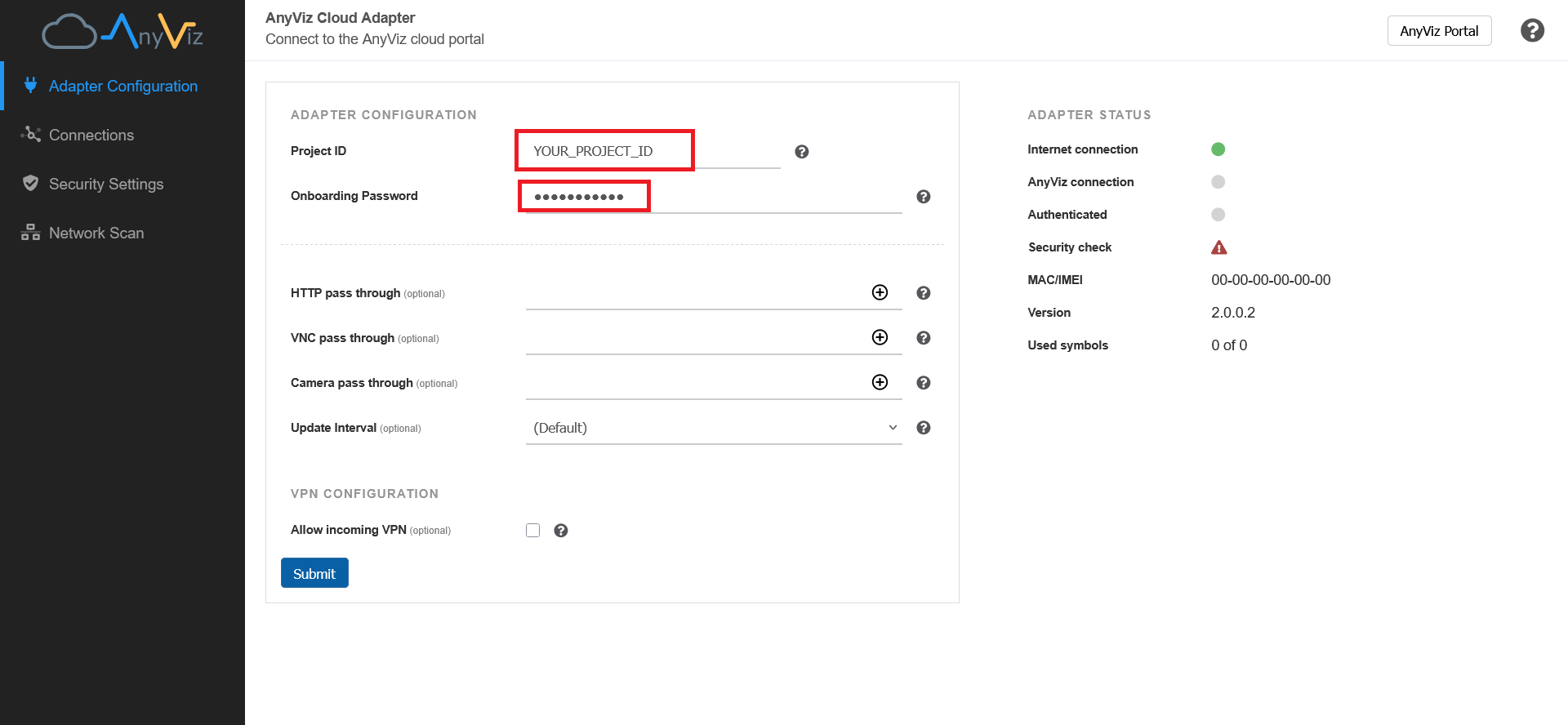
First access: the adapter asks for your AnyViz credentials. The next field asks for your Project ID; you can find it in your AnyViz dashboard.
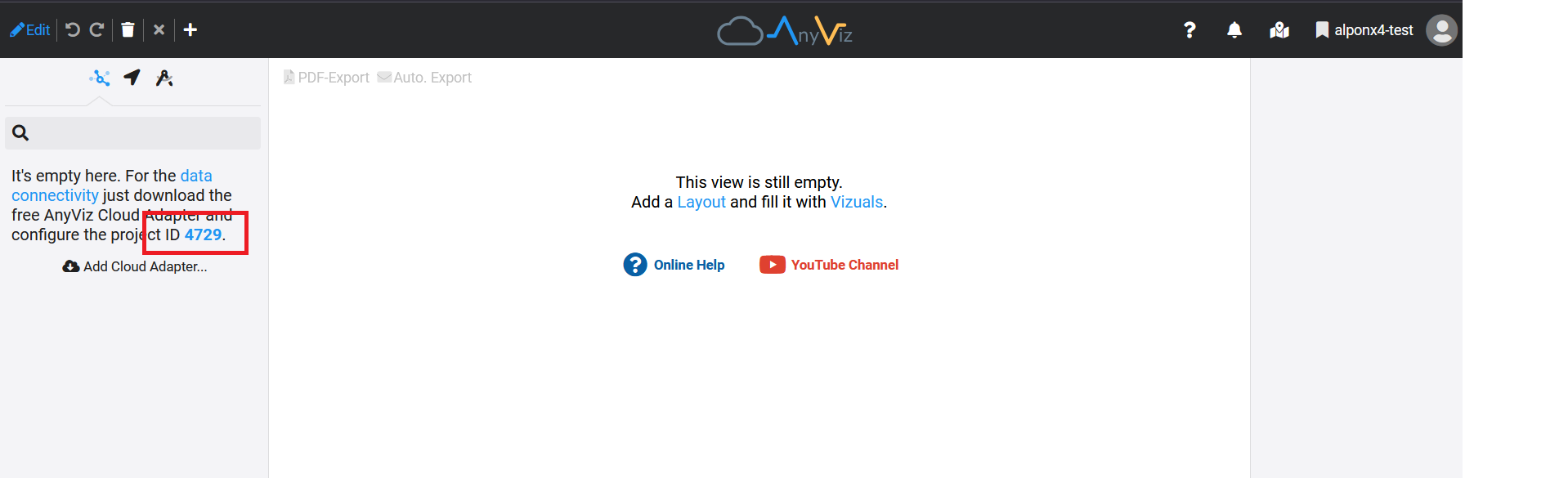
Enter the Project ID from your AnyViz dashboard to link the adapter to the project.
- The
anyvizcontainer shows as running in the Applications section. - The dashboard loads at
http://<DEVICE_IP>:8888. - The adapter accepts your AnyViz credentials and Project ID and appears in your AnyViz project.
The AnyViz Cloud Adapter is now running on the ALPON. See the AnyViz documentation for detailed use cases such as automating industrial processes in manufacturing, real-time monitoring of smart city infrastructure, and predictive maintenance. ALPON Cloud handles remote updates, monitoring, and bulk provisioning for a single device or an entire fleet.
Production image policy: Replace floating
:latestreferences with a reviewed immutable tag or digest, then record the selected version for rollback.
Updated 16 days ago